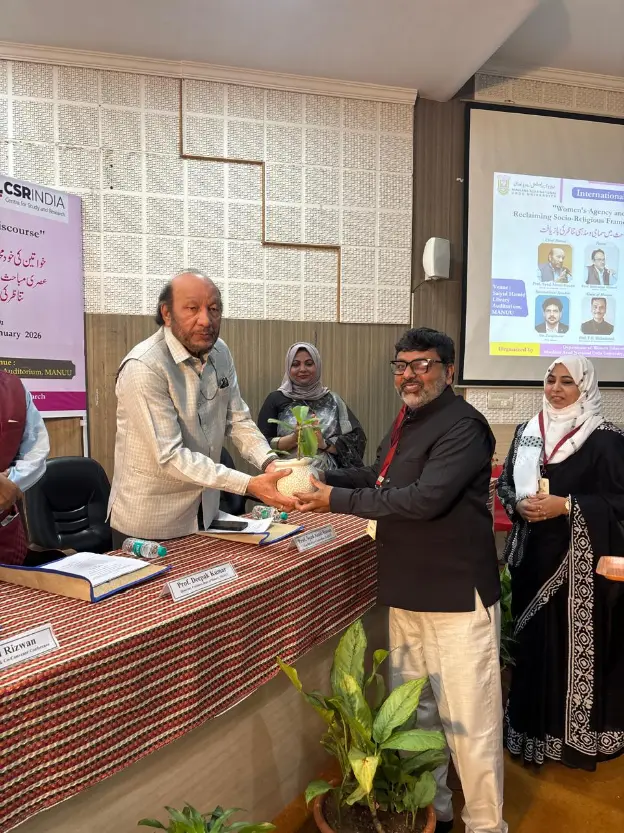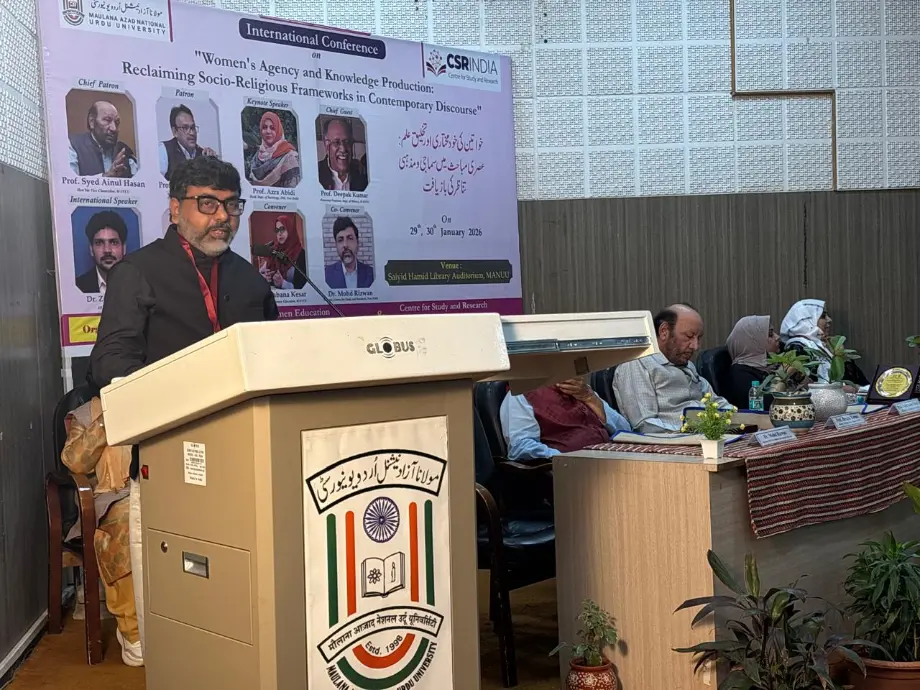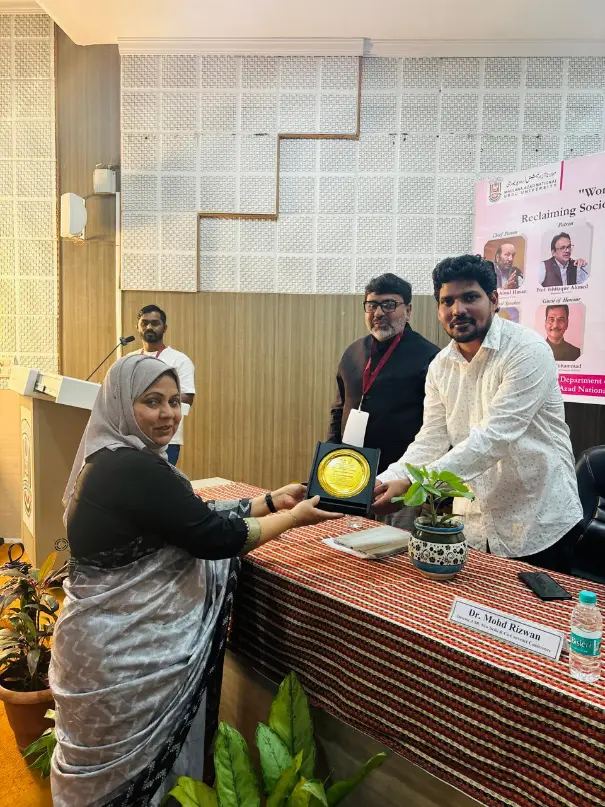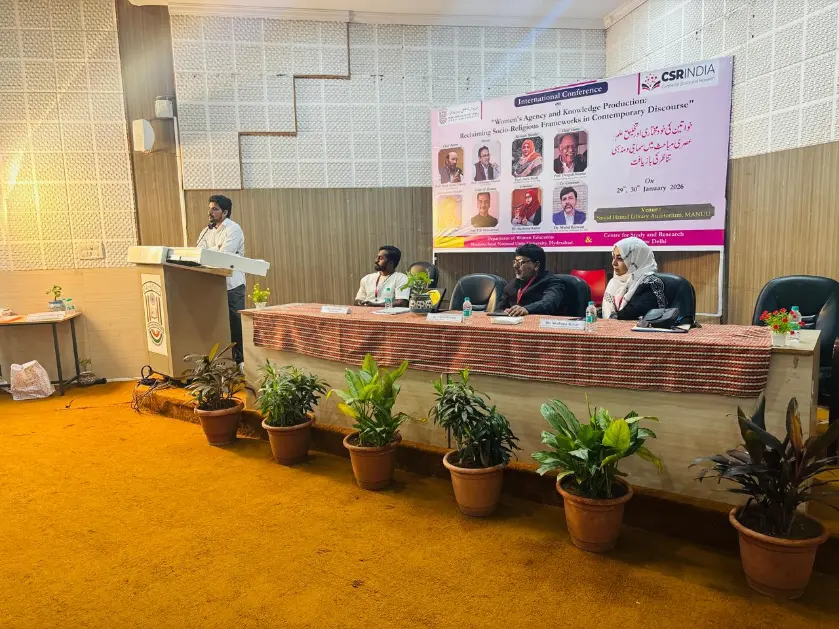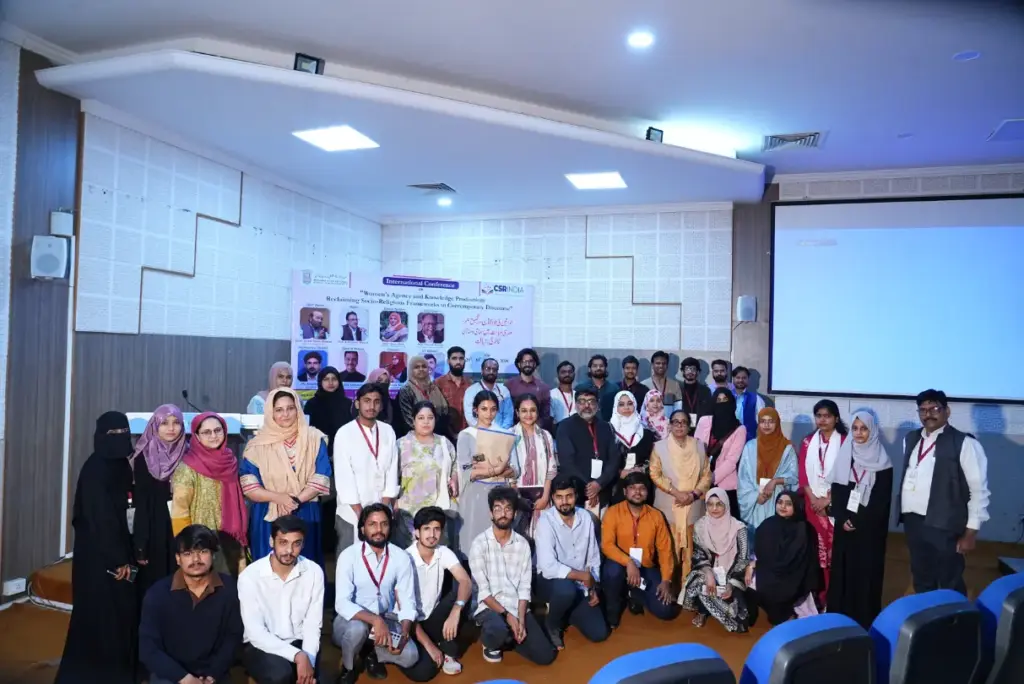
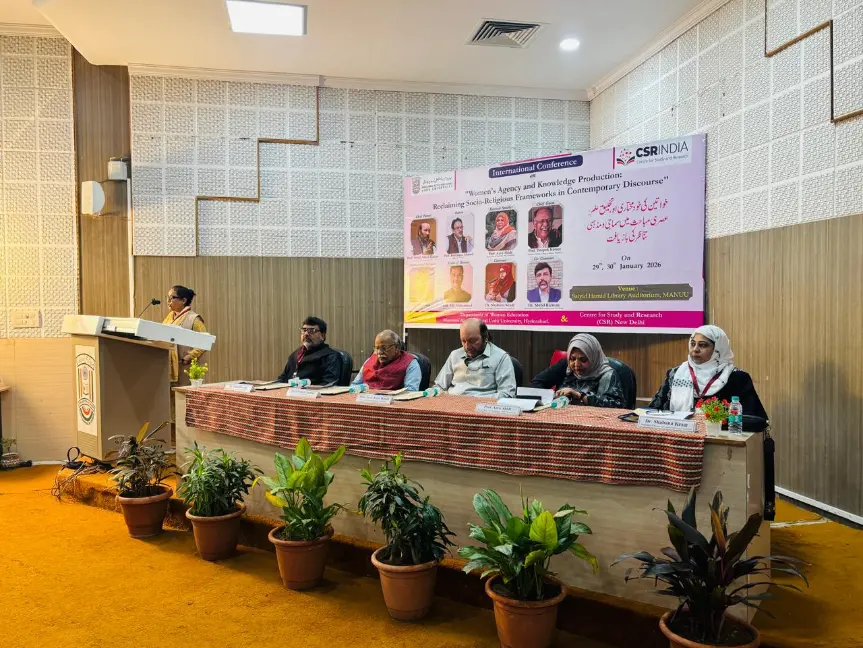
The Department of Women Education, MANUU, in collaboration with the Centre for Study and Research (CSR), New Delhi, successfully organized a two-day International Conference titled “Women’s Agency and Knowledge Production: Reclaiming Socio-Religious Frameworks in Contemporary Discourse” on 29–30 January 2026. The conference critically engaged with questions of women’s agency, epistemology, authority, and empowerment within socio-religious and contemporary knowledge frameworks. Scholars, academicians, and research scholars from institutions across India and abroad participated in the deliberations.
The inaugural session commenced at 10:30 AM with Tilawat-e-Qur’an. Dr. Shabana Kesar, Head of the Department of Women Education at MANUU and Conference Convener, delivered the Welcome Address. She outlined the conference objectives and highlighted the significance of reclaiming women’s agency and knowledge traditions within socio-religious contexts.
The Conference Overview was presented by Dr. Mohd. Rizwan, Director, CSR, New Delhi, and Co-Convener. He contextualized the theme and emphasized the need for interdisciplinary engagement with gender and knowledge production. The session was enriched by the Chief Guest, Prof. Deepak Kumar, Honorary Professor, Department of History, MANUU, who reflected on historical perspectives of women’s intellectual contributions. The Keynote Address was delivered by Prof. Azra Abidi, Head, Department of Sociology, Jamia Millia Islamia, New Delhi, offering critical insights into gender, society, and the politics of knowledge.
The Presidential Address by Prof. Syed Ainul Hasan, Hon’ble Vice-Chancellor, MANUU, underscored the university’s commitment to fostering inclusive and critical academic discourse on gender and society. The session concluded with a Vote of Thanks by Dr. Tabrez Hussain and was coordinated by Dr. Parveen Qamar.
The first plenary lecture, “Epistemology, Agency, and Knowledge Traditions,” was delivered by Dr. Zulqernain Haider (IIUM, Malaysia). It examined women, work, and agency through the Maqasid framework, offering a nuanced understanding of embodied knowledge.
Technical Session I, chaired by Prof. Ameena Tahseen, featured research papers on women’s epistemic authority, reformist thought, and historical contributions to knowledge production. The session sparked vibrant discussions on methodology and interpretation.
The second plenary lecture, “Gender, Religion and the Postsecular Imagination of Rights,” was delivered by Dr. Sherin B.S. (EFLU, Hyderabad). It highlighted intersections of religion, rights, and gender in contemporary discourse.
Technical Session II, chaired by Dr. Mohd. Rizwan, explored Qur’anic concepts, healing practices, ritual authority, and historical as well as contemporary models of women’s educational agency. It concluded with an open discussion and chair’s remarks.
The third plenary lecture, “The Politics of Knowing: Gender, Power, and the Future,” was delivered by Dr. Shabana Kesar. It critically examined how power structures shape knowledge systems and their implications for future scholarship.
The third plenary lecture, “The Politics of Knowing: Gender, Power, and the Future,” was delivered by Dr. Shabana Kesar. It critically examined how power structures shape knowledge systems and their implications for future scholarship.
Technical Session III, chaired by Prof. Danish, focused on historical legacies, feminist critiques, higher education, digital media, and representations of women’s agency—particularly in minority and conflict contexts.
The fourth plenary lecture, “Faith, Ethics, and Civilizational Futures,” was delivered by Dr. Ayesha Alvi (CSR, New Delhi). It emphasized ethical responsibility and faith-based perspectives in reimagining empowerment.
Technical Session IV, chaired by Prof. Md. Athar Hussain, addressed institutional ecosystems, teacher empowerment, and policy frameworks such as NEP 2020. It ended with an open discussion.
The valedictory session began with the Conference Report presented by Dr. Shabana Kesar, Convener. This was followed by participant reflections sharing academic experiences and key takeaways.
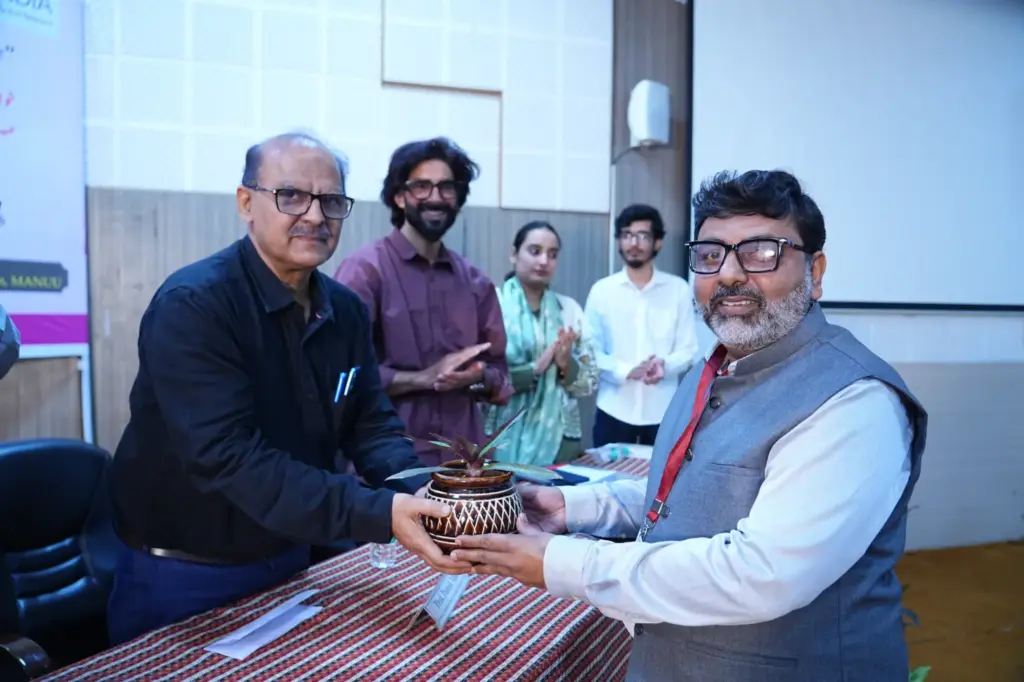
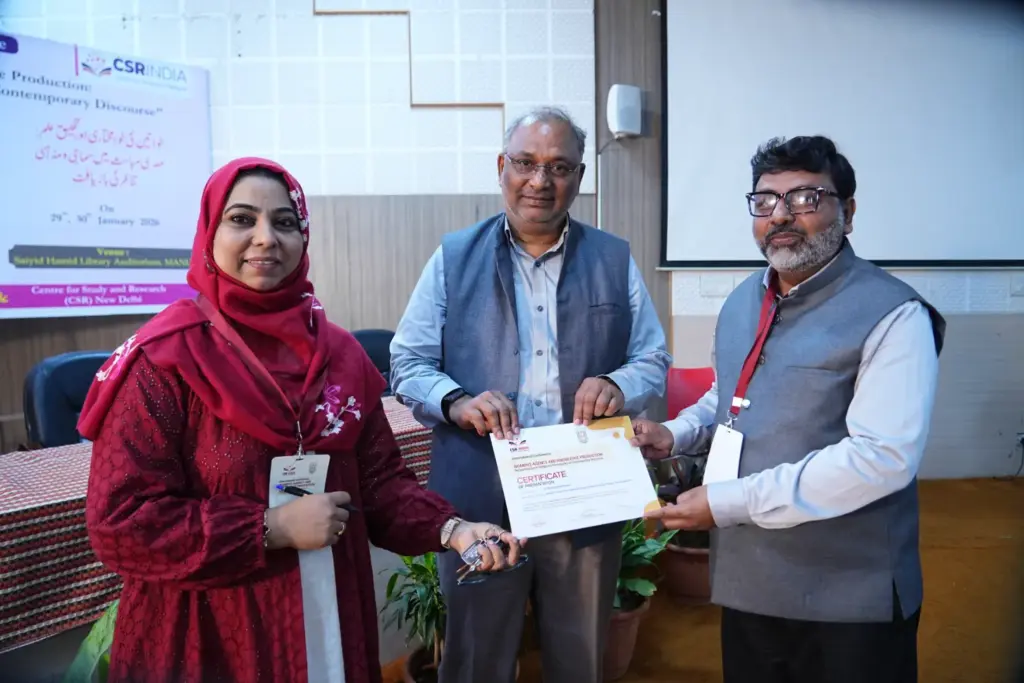
The Guest of Honour, Prof. P. H. Mohammad, Dean, School of Arts and Social Sciences, MANUU, addressed the gathering and appreciated the conference’s scholarly depth. Closing Remarks were delivered by Dr. Mohd. Rizwan, Co-Convener, followed by the distribution of certificates to paper presenters. The session concluded with a Vote of Thanks by Dr. Mujtaba Farooq.
The conference provided a rich platform for critical engagement with women’s agency, socio-religious frameworks, and knowledge production. Its deliberations contributed meaningfully to contemporary gender discourse and reinforced MANUU’s role as a vibrant center for inclusive, interdisciplinary scholarship.