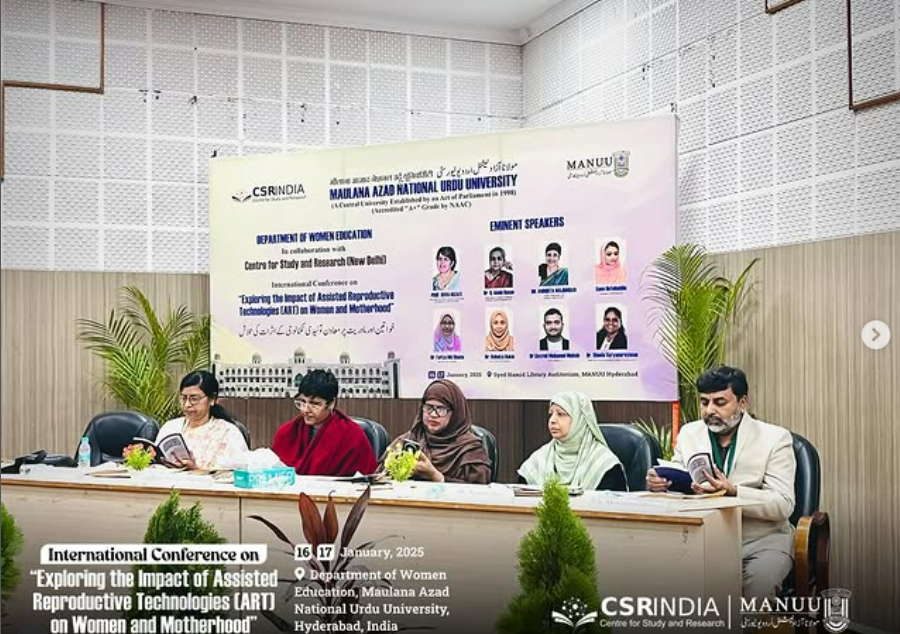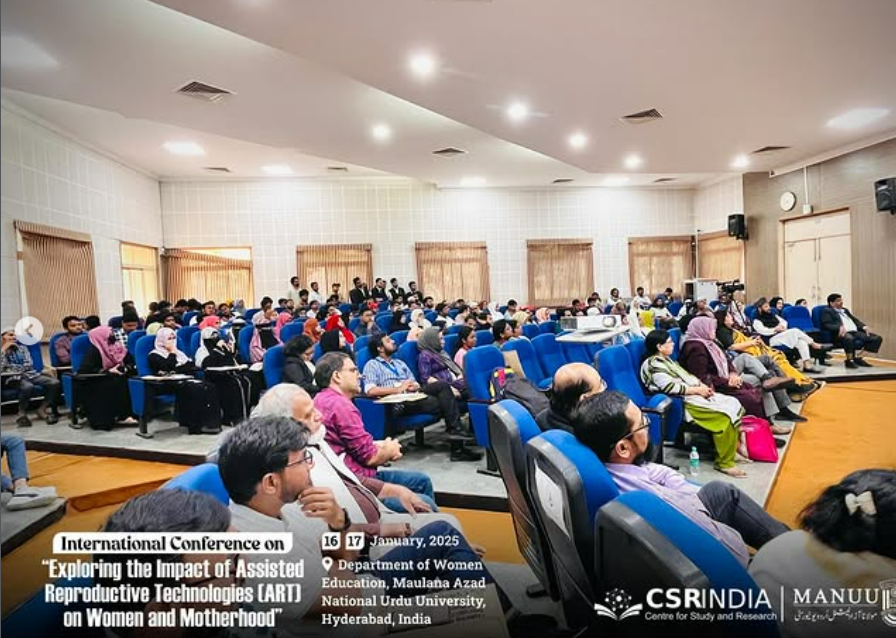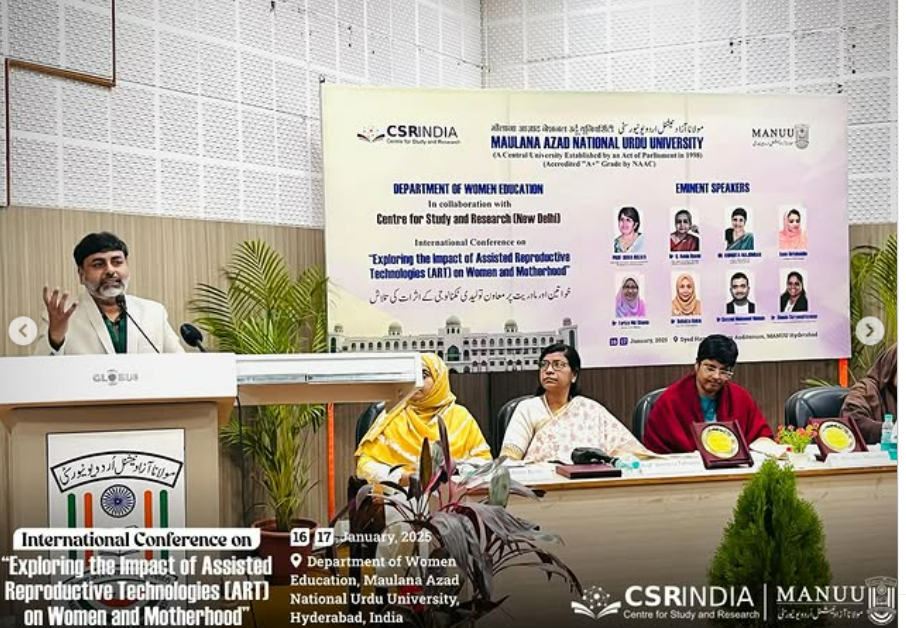
The International Conference titled “Exploring the Impact of Assisted Reproductive Technologies (ART) on Women and Motherhood” was held on January 16th and 17th, 2025. This academic gathering was organised by the Department of Women Education, Maulana Azad National Urdu University (MANUU), Hyderabad, in collaboration with the Centre for Study and Research (CSR), New Delhi. The event aimed to serve as an intellectual crucible for discussing the intersection of technological innovation, ethical quandaries, and the socio-cultural repercussions on women’s lives and the conceptualization of motherhood.
The conference was designed to cultivate a sophisticated discourse extending beyond a superficial examination of technological prowess. It sought to unravel the transformative impact of technologies such as artificial wombs, surrogacy, and gene editing on women’s identity and agency. A major focus was placed on the “Pandora’s box” of questions these technologies open regarding classical feministic discourse and the fundamental paradigms of parenthood. Furthermore, the event aimed to explore the positive contributions religious perspectives can offer in this realm while investigating how different cultural norms shape attitudes toward assisted reproduction.
The inaugural session successfully set the stage with the presence of esteemed figures including Prof. Ameena Tahseen (Seminar Director), Dr. Mohammad Rizwan (Director CSR), and Prof. Shahida (Dean, SA & SS). The first day featured a stimulative talk by Dr. Anindita Majumdar from IIT Hyderabad and a plenary lecture by Dr. Sheela Suryanarayanan from the University of Hyderabad. Dr. Suryanarayanan addressed the disjuncture between surrogate mothers’ experiences of motherhood in India and the legalities of surrogacy contracts. Technical Session II focused on the theme “Feminism, Motherhood, and Beyond,” featuring a plenary lecture by Dr. Rohaiza Rokis from the International Islamic University, Malaysia. Paper presentations during this session explored diverse topics such as “Cyborg Motherhood” in literature by Najla K.A.S. and the commercialization of reproductive technologies in Kerala through a Marxist Feminist perspective by Mohammed Suhail C.
The second day continued with Technical Session III, titled “ART and Religious Discourse: Navigating Need and Faith,” which featured a plenary lecture by Dr. Sayyed Mohamed Muhsin. This session delved into Sunni-Islam bioethics and critical appraisals of various schools of thought through the lens of Maqasid Ash-Shariah. Technical Session IV featured Dr. Roya Rozati, who provided an in-depth insight into the ART Act Law, chaired by Prof. Tabrez Ahmad. The final technical session, “Listening to Surrogates,” focused on the psychosocial impact of surrogacy. Dr. Fariza Md Shams from UKM, Malaysia, delivered a lecture on the socio-psychological experiences of surrogates, followed by research presentations on mental health, the perspectives of biology teachers, and the legal rights of surrogates across global jurisdictions.
The conference addressed several critical sub-themes, including the ethical dilemmas of artificial wombs, which mimic the natural gestation environment but raise concerns about the separation of reproduction from the embodied experience of pregnancy. Discussions also covered reproductive tourism, where individuals travel across borders to access services, often leading to potential exploitation of the disadvantaged. Participants were encouraged to examine how ART challenges or reshapes traditional family structures and to present empirical evidence on the long-term health consequences of these procedures for both mothers and children.
The conference concluded with a valedictory session that offered thoughtful insights to advance the field. Dr. Ayesha Alvi presented the comprehensive conference report, and Dr. Q. Annie Hasan served as the Chief Guest, delivering an address on genetics and molecular medicine. The Presidential address was delivered by Prof. Sk. Ishtiaque Ahmed, Registrar of MANUU. Ultimately, the conference aimed to propose recommendations for ethical practices in assisted reproduction and to foster a deeper understanding of the transformative impacts these technologies have on the landscape of womanhood.